
Central and East European Coalition: Busy July of Advocacy on Capitol Hill
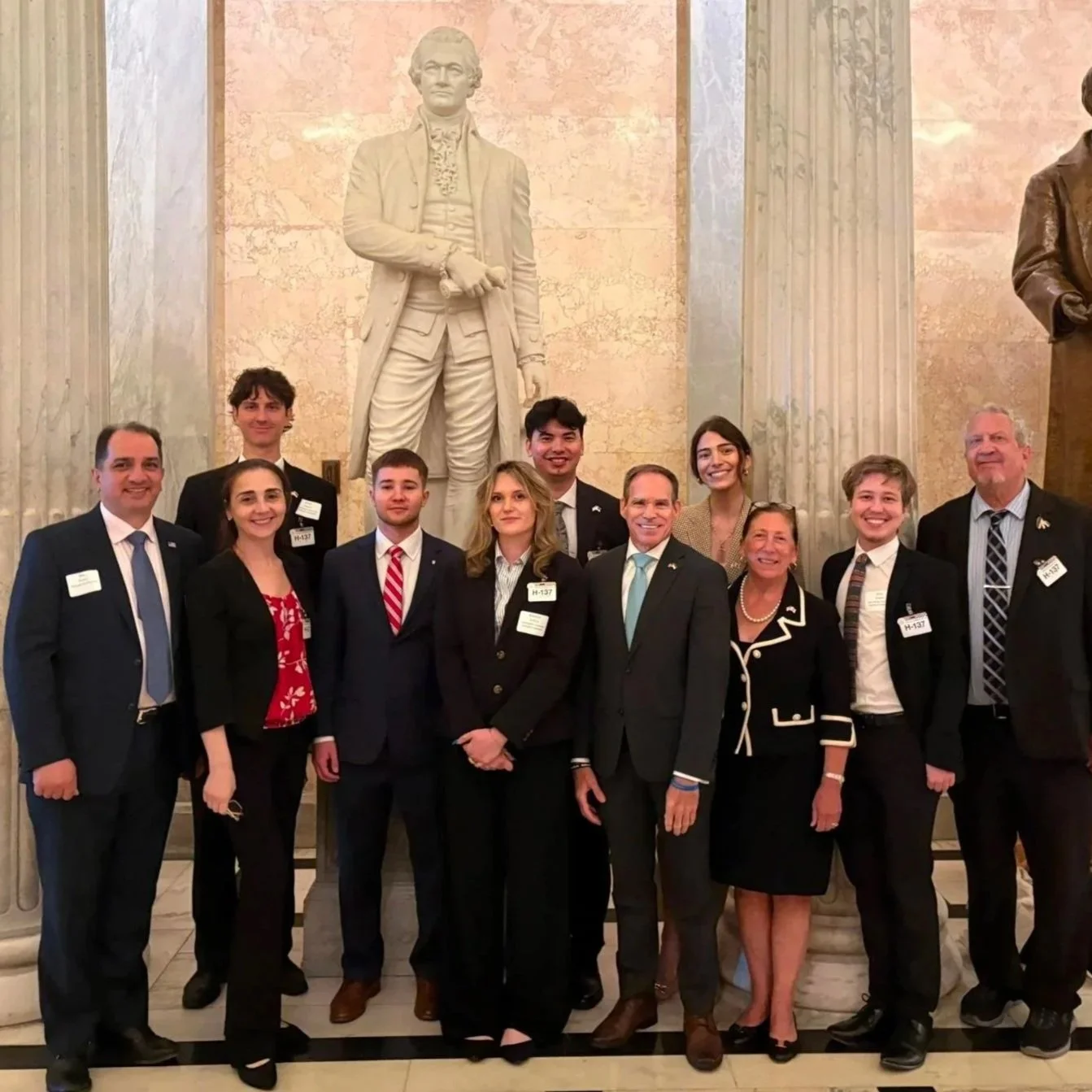
CEEC Delegation at the Senate Russell Building.
July proved to be a busy one for advocacy for the Central and East European Coalition (CEEC). On July 14-15 and July 29, a team of CEEC representatives met with over a dozen congressional offices, committees, and Members of Congress to seek continued support for legislative priorities.
All discussions during the three days of meetings focused on strengthening U.S. engagement in Central and Eastern Europe and advancing policies that support regional security and stability. Several issues were brought up, including Russia's war of aggression against Ukraine and U.S. sanctions policy, the situation in the Republic of Georgia, the recently concluded NATO Summit and next year’s summit in Albania, and continued support for the Baltic Security Initiative and a continued U.S. troop presence in the region. A common thread shared by every CEEC member organization is the need to counter the growing threats posed by Russian aggression and malign influence throughout our region.
Of primary topical importance was the status of the Russia sanctions bill, which has suddenly taken on renewed impetus in the wake of the sudden death of Senator Lindsey Graham (R-South Carolina), one of the drivers behind the legislation. The Senate bill has received overwhelming support and is poised to be voted on before the August recess and is expected to be introduced shortly in the House. The bill has languished due to earlier opposition from the White House and differences with the House version.
CEEC members also paid their respects by signing the memorial book honoring Senator Graham.
On July 14, the CEEC visited with the Deputy Chief of Staff and Legislative Director at the office of Rep. French Hill (R-Arkansas). Rep. Hill serves on the Foreign Affairs and Intelligence Committees and is Chairman of the Subcommittee on Digital Assets in the Committee on Financial Services. That committee oversees and helps shape sanctions policy, including any policies directed towards Russia. While the House Foreign Affairs Committee has primary jurisdiction over foreign policy, the Financial Services Committee handles the economic and financial mechanisms of sanctions, including oversight of the Treasury's Office of Foreign Assets Control (OFAC) and anti-money laundering.
That afternoon, the CEEC also met with Senator Roger Wicker’s (R-Mississippi) Defense Legislative Fellow. As Senator Wicker is Chairman of both the Armed Services Committee and the Helsinki Commission, he holds two very important leadership positions, giving him direction in channeling support for funding priorities and security assistance in the National Defense Authorization Act, and in supporting human rights and other international cooperation.
On the second day of advocacy on July 15, the group met with Senator Chris Coons (D-Delaware) and his staff, as well as the senior staff of the Senate Foreign Relations Committee. Following that were meetings with Rep. Keith Self (R-Texas), the Chairman of the House European Subcommittee in Foreign Affairs; and with Rep. Zach Nunn (R-Iowa). Back on the Senate side, the team also conferred with the Military Legislative Adviser in the office of Senator Elissa Slotkin (D-Michigan). CEEC members were invited to a “Taste of Michigan” reception, where they also met briefly with Michigan Senators Slotkin and Gary Peters (D-Michigan). A bonus was meeting Latvian Foreign Minister Baiba Braže, who happened to be in town, following a trip to the Latvian Song and Dance Festival in Grand Rapids, Michigan.
July 29 meetings were held with the senior staff of Senators Tim Kaine (D-Virginia), Richard Blumenthal (D-Connecticut), and the Helsinki Commission, to elaborate on issues under the Commission’s purview.
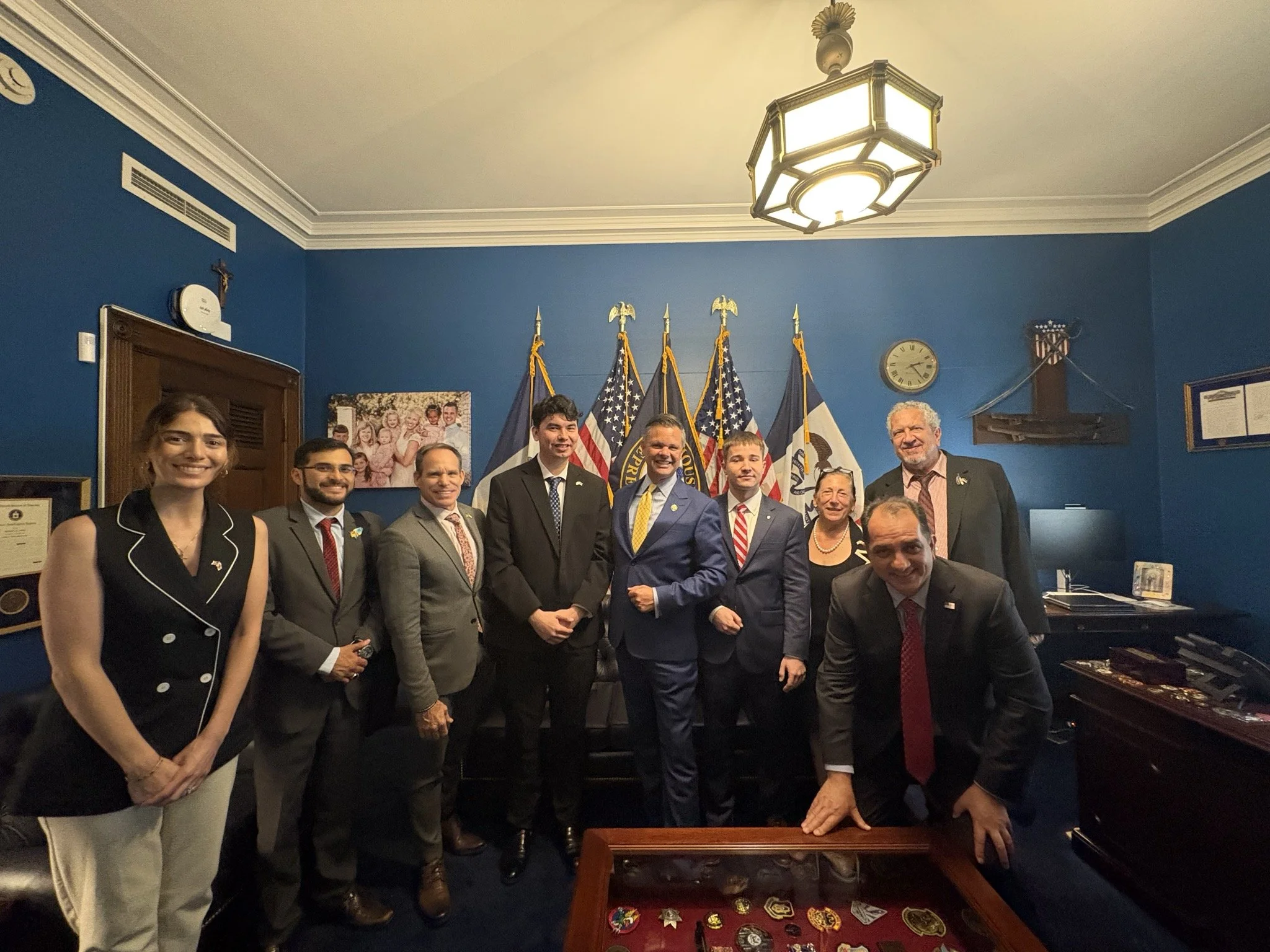
CEEC Delegation meeting with Rep. Zach Nunn (R-Iowa)
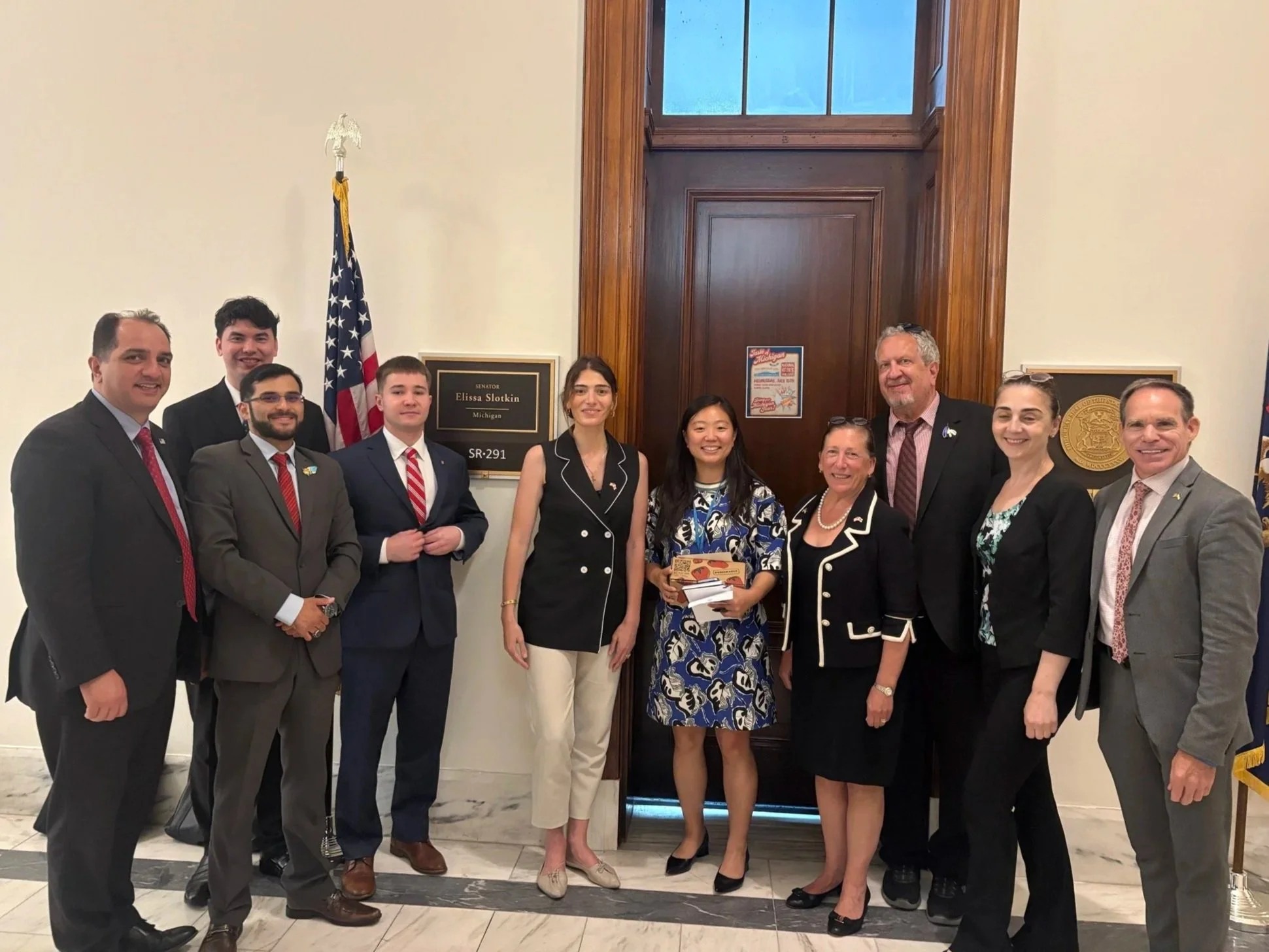
CEEC Delegates meeting with legislative staffer for Senator Elissa Slotkin (D-Michigan)
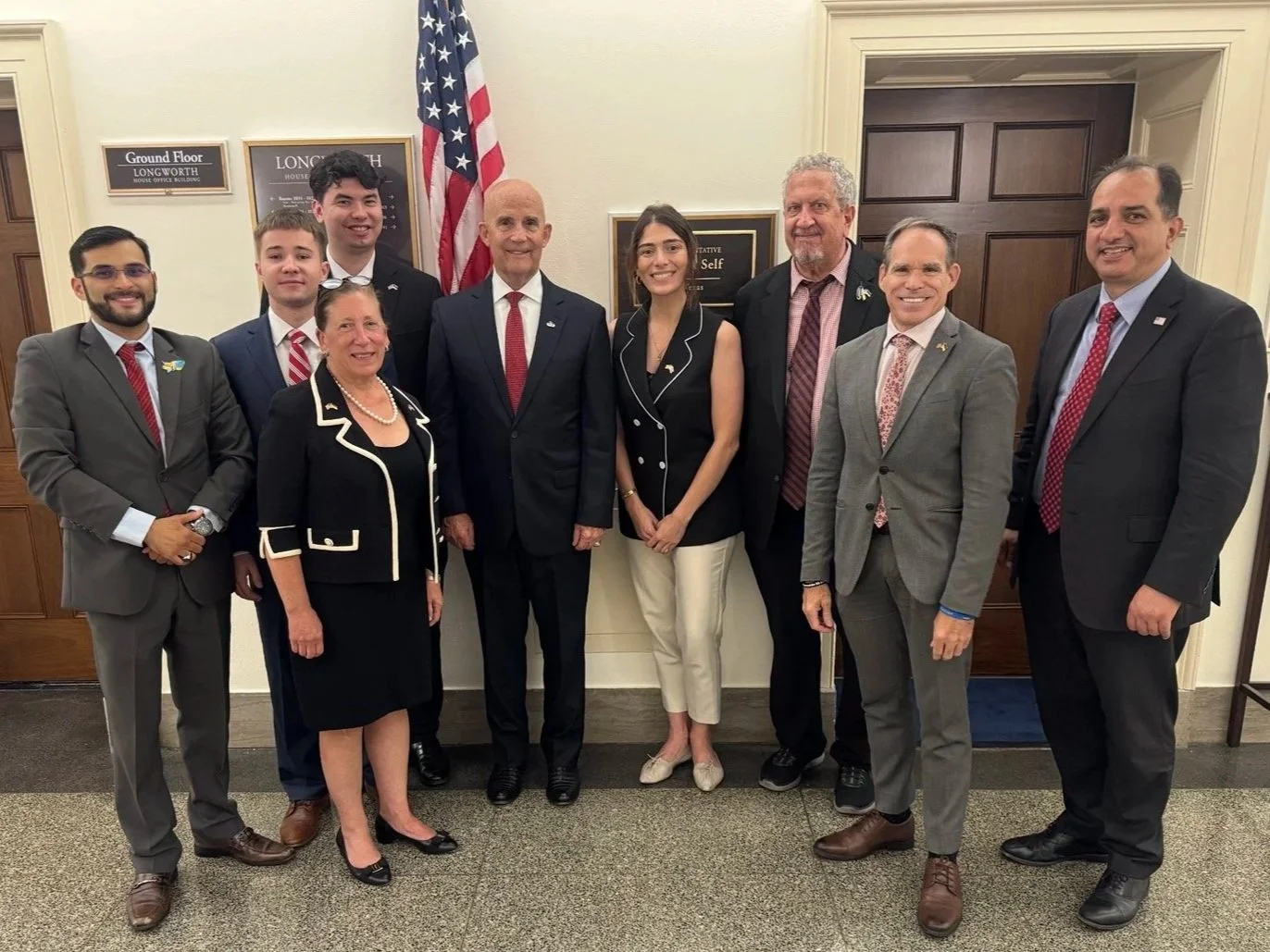
CEEC delegation meeting with Congressman Keith Self (R-Texas)
Additionally, CEEC members joined a July 14 briefing in the U.S. Capitol with the three Baltic embassies to highlight these countries' NATO Centers of Excellence. The briefing was entitled “Enhanced Resilience: A View from the NATO Centers of Excellence in the Baltic Countries” and was sponsored by House Baltic Caucus Co-Chairs Reps. Don Bacon (R-Nebraska) and Salud Carbajal (D-California). It was attended by 50 guests, primarily congressional staffers, government relations professionals, and defense advocates. The speakers were Lithuanian Ambassador Gediminas Varvuolis, Latvian Ambassador Elita Kuzma, and Deputy Defense Counselor Mikk Raud from the Embassy of Estonia. Each highlighted the unique capabilities and expertise that the respective Centers bring to the Alliance, as well as the priorities of each country in hosting its specific Center, to support NATO’s resilience, collective defense, and deterrence. Centers of Excellence (COEs) are international military organizations that train and educate leaders and specialists from NATO member and partner countries.
Estonia hosts the NATO Cooperative Cyber Defense Centre of Excellence, Latvia the NATO Strategic Communications Centre of Excellence, and Lithuania the Energy Security Centre of Excellence.
Established in 1994, the CEEC comprises 15 active U.S. national organizations and communities with Central and Eastern European heritage that work together to strengthen American partnerships with the region and advance the shared goal of a free, secure, and democratic Europe. The CEEC looks forward to building on these relationships as it continues advocating for freedom, security, and stronger transatlantic relations.
###
